Top EV Wiring Harness Manufacturers in India | Rajashree International
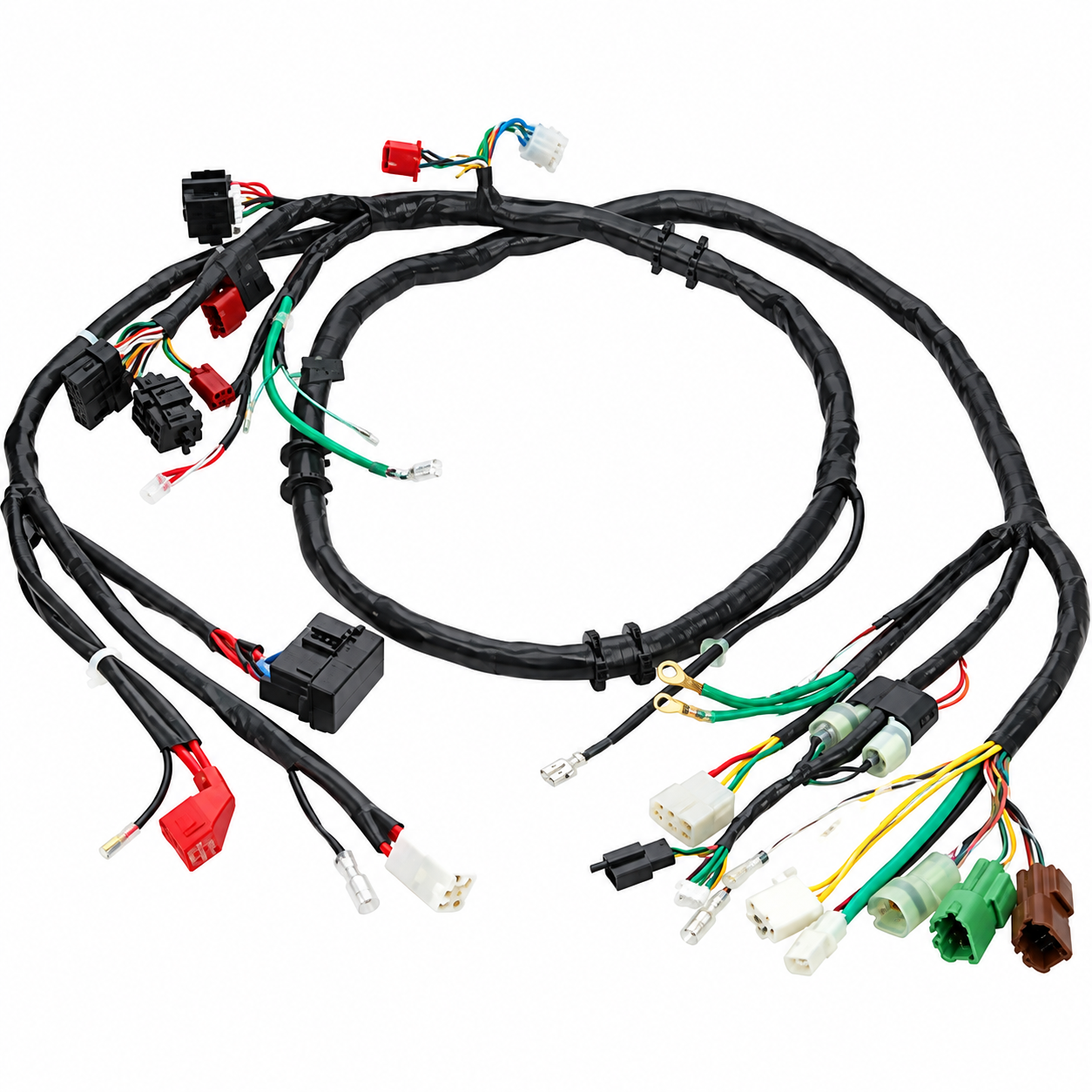


Rajashree International Manufacturing Pvt. Ltd. is leading EV Wiring Harness Manufacturers, Suppliers and Dealers in India. An EV Wiring Harness is a critical electrical assembly that connects batteries, motors, controllers, charging systems, sensors, and other electronic components in electric vehicles. It enables reliable transmission of power and signals throughout the vehicle.
An electric vehicle wiring harness is designed to support organized electrical connectivity while reducing installation complexity. Proper harness design, similar to an automotive wiring harness, also contributes to electrical safety, efficient routing, and dependable vehicle performance.
Modern electric mobility requires carefully engineered harness assemblies for different vehicle architectures. From compact electric two-wheelers to commercial vehicles, we provide solutions designed according to electrical requirements, component layouts, and operating conditions.
Types of EV Wiring Harness
As we are leading EV Wiring Harness Manufacturers in India, our Types are designed to meet different application requirements and industry standards, including the following types:
- EV Wire Harness System: An EV wire harness system integrates multiple wires, terminals, connectors, and protective components to establish organized electrical connections across the vehicle.
- High Voltage Wiring Harness: High voltage wiring harness carries electrical power between major high-energy components such as the battery, inverter, motor, and charging equipment.
- Low Voltage Wiring Harness EV: Low voltage wiring harness EV supports auxiliary systems, control electronics, lighting, sensors, displays, and other low-voltage electrical functions.
- HV Wire Harness: An HV wire harness is engineered for high-energy circuits and incorporates suitable insulation, protection, connectors, and routing arrangements.
- High Voltage vs. Low Voltage Harness: The high voltage vs. low voltage harness selection depends on voltage level, current requirements, insulation, safety provisions, and the specific vehicle application.
- EV Battery Wiring Harness: An EV battery wiring harness connects battery modules and associated electrical components while supporting dependable power and monitoring connections.
- BMS Wiring Harness: BMS wiring harness connects battery management system components with cells, sensors, and control units for monitoring and communication.
- EV Motor Wiring Harness: An EV motor wiring harness establishes electrical connections between the propulsion motor and related motor controller or power electronics.
- EV Charging Wiring Harness: An EV charging wiring harness provides organized electrical connectivity between charging components and the vehicle's battery system.
- Power Distribution Unit EV: A power distribution unit EV manages the distribution of electrical energy to designated circuits and vehicle systems.
Detailed Process Description
A systematic manufacturing process helps ensure electrical reliability, dimensional accuracy, and consistent harness quality.
- Requirement Analysis: We evaluate voltage, current, cable length, connector requirements, operating environment, and vehicle architecture before defining the harness configuration.
- Wire and Component Selection: Suitable wires, terminals, connectors, protective coverings, and insulation materials are selected according to electrical and environmental requirements.
- Cutting and Preparation: Wires are accurately cut to the required lengths and prepared for terminal attachment, stripping, identification, and connector assembly.
- Crimping and Assembly: Terminals are securely crimped to conductors before connectors and other components are assembled according to the approved design.
- Protection and Routing: Protective sleeving, shielding, clips, and other provisions are incorporated to support proper installation and protect the harness during vehicle operation.
- Testing and Inspection: Continuity, insulation, connection integrity, dimensional parameters, and other applicable quality characteristics are checked before final inspection.
- Final Quality Verification: The completed harness is inspected against approved drawings and application requirements to ensure that the finished assembly is ready for installation.
Technical Specifications of EV Wiring Harness
As a trusted EV Wiring Harness Suppliers in India, we serve businesses across various industries, including appliance wiring harness users, that meet professional visual communication requirements.
| Parameter | Specification | Design Consideration | Material / Component | Application |
|---|---|---|---|---|
| Voltage | Application-specific | Electrical safety | Copper or aluminium conductor | EV power circuits |
| Current Capacity | Application-specific | Load requirement | Suitable conductor size | Battery and motor systems |
| Connectors | Application-specific | Secure connectivity | Automotive-grade connectors | Power and signal circuits |
| Protection | Application-specific | Mechanical and environmental protection | Sleeving, insulation, shielding | Vehicle installation |
| Configuration | Customized | Vehicle architecture | Wires, terminals, clips | 2W, 3W, 4W and commercial EVs |
Features and Benefits of EV Wiring Harness
As EV Wiring Harness Dealers in India, our products provide several Features and Benefits including consistent quality, smooth finish, and long service life.
| Features | Benefits |
|---|---|
| Application-specific design | Supports efficient integration with different vehicle architectures |
| Organized wire arrangement | Simplifies installation, identification, and maintenance |
| Secure terminal connections | Helps maintain reliable electrical continuity |
| Protective insulation | Provides suitable electrical and environmental protection |
| Customized lengths and layouts | Helps reduce unnecessary wiring and installation complexity |
| Quality inspection | Supports consistent assembly and dependable performance |
| Flexible connector options | Enables compatibility with different vehicle components |
Applications of EV Wiring Harness
As EV Wiring Harness Manufacturers in India, our all types are used in various types of industrial sectors such as:
- 2 Wheeler EV Wiring Harness: A 2 wheeler EV wiring harness is designed for compact electric scooters and motorcycles, where lightweight construction, compact dimensions, and efficient routing are important.
- 3 Wheeler EV Wiring Harness: A 3 wheeler EV wiring harness supports electrical connections in electric passenger and cargo three-wheelers with application-specific power and control requirements.
- 4 Wheeler EV Wiring Harness: A 4 wheeler EV wiring harness connects major electrical and electronic systems in passenger and utility electric vehicles with multiple interconnected circuits.
- Commercial EV Wiring Harness: A commercial EV wiring harness is suitable for electric commercial vehicles requiring organized and durable connections across propulsion and auxiliary systems.
- EV Bus Wiring Harness: Appliance Wiring Harness supports electrical connectivity across larger vehicle platforms, including propulsion, control, charging, and auxiliary circuits.
- Wiring Harness Connectors: Wiring harness connectors provide detachable and secure interfaces between harness assemblies and vehicle components, supporting convenient installation and servicing.
- Wiring Harness Terminals: Appliance Wiring Harness terminals create reliable electrical contact between conductors and connectors while supporting consistent electrical and mechanical connections.
- EV Harness Insulation Materials: Suitable EV harness insulation materials help protect conductors against electrical, thermal, mechanical, and environmental stresses during vehicle operation.
- EMI Shielding Wiring Harness: An EMI shielding wiring harness helps reduce electromagnetic interference and supports dependable operation of sensitive electronic systems within the vehicle.
- Wiring Harness Sleeving: Wiring harness sleeving provides additional protection against abrasion, heat, contamination, and mechanical exposure while helping maintain an organized assembly.
Why Choose Us?
- Application-Focused Engineering: We develop harness solutions according to vehicle architecture, electrical requirements, component positioning, installation conditions, and specific customer requirements.
- Quality-Oriented Manufacturing: Our manufacturing approach emphasizes accurate assembly, dependable connections, appropriate material selection, and systematic quality inspection.
- Customized Solutions: We support customized harness configurations based on required lengths, connectors, terminal configurations, routing arrangements, and vehicle-specific requirements.
- Material Selection Expertise: We carefully evaluate copper vs aluminum wiring harness requirements to achieve an appropriate balance of conductivity, weight, durability, and application suitability.
- Advanced Material Options: We can evaluate lightweight wiring harness materials and flame retardant wiring harness requirements according to vehicle design, operating conditions, and applicable safety needs.
Choose Rajashree International Manufacturing Pvt. Ltd. is leading EV Wiring Harness Manufacturers, Suppliers and Dealers in India. A well-designed EV harness plays a vital role in connecting the complete electrical architecture of an electric vehicle. From battery and propulsion circuits to charging, control, and auxiliary systems, every connection requires appropriate engineering, protection, and quality control. With application-focused design, suitable materials, and dependable manufacturing practices, we provide harness solutions that support the evolving requirements of modern electric mobility.
FAQs
It is an organized assembly of wires, terminals, connectors, and protective components used to transmit electrical power and signals throughout an electric vehicle.
High-voltage assemblies primarily handle power for propulsion and energy systems, while low-voltage assemblies generally support controls, sensors, lighting, and auxiliary electronics.
Yes. Harnesses can be developed according to required wire lengths, connector types, terminal configurations, routing paths, and vehicle architecture.
Correct wire harness routing helps maintain suitable clearances, minimize mechanical stress, protect cables from damage, and support reliable vehicle operation.
Conductors, insulation, shielding, terminals, connectors, and protective coverings are selected according to voltage, current, temperature, mechanical, and environmental requirements.