Top 10 EV Motor Controller Manufacturers in India | Rajashree International
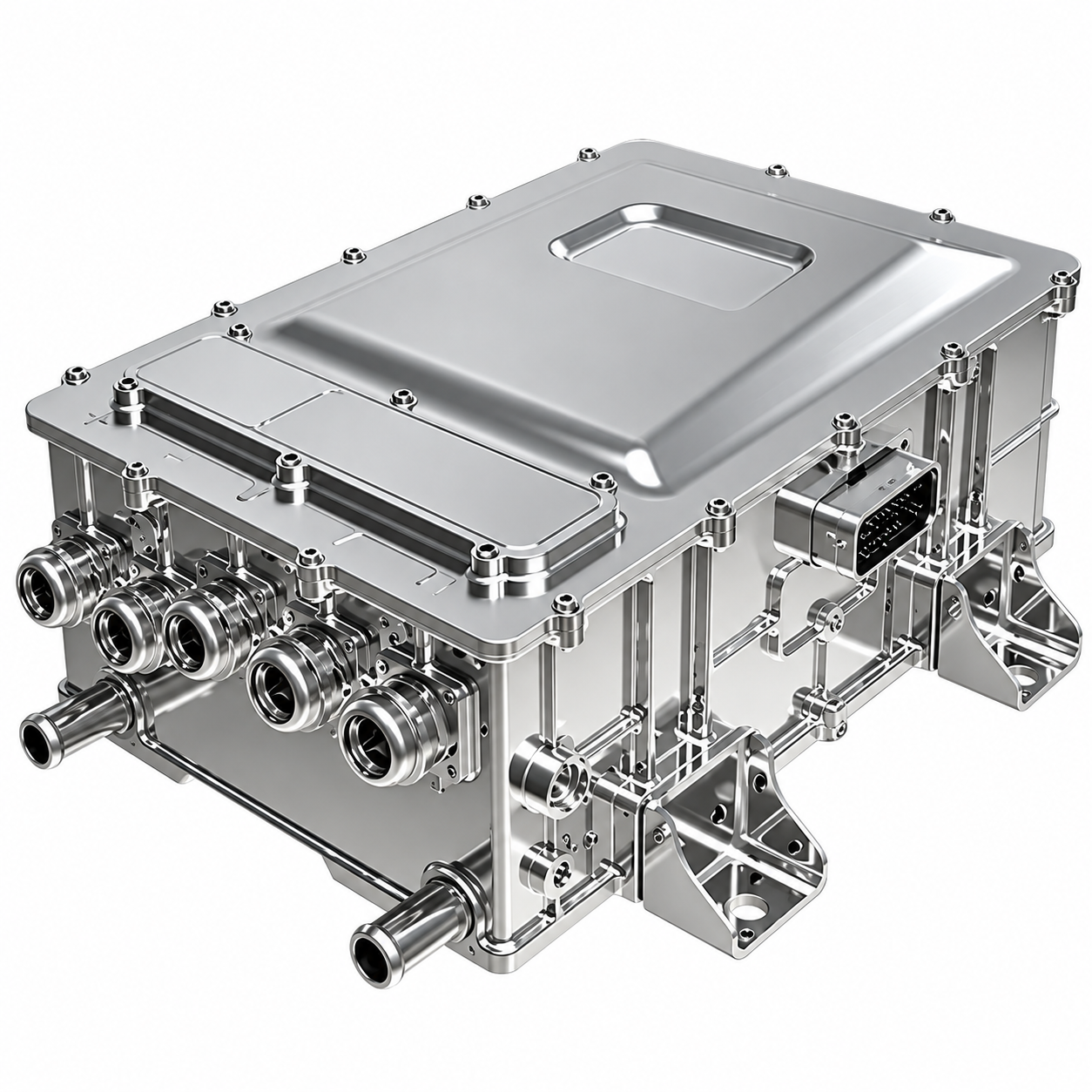


Rajashree International Manufacturing Pvt. Ltd. is leading EV Motor Controller Manufacturers, Suppliers and Dealers in India. An EV motor controller is a key electronic component that manages the operation of an electric motor by regulating power, speed, torque, and direction. It acts as an intelligent interface between the battery, motor, and vehicle control system.
A Motor control unit EV system receives input signals and converts them into controlled electrical output for efficient motor operation. It helps provide smooth acceleration, responsive performance, and controlled energy consumption during different driving conditions.
A Motor controller for electric vehicle applications is designed according to motor type, voltage, current, power, and vehicle requirements. Advanced controllers can also support protection functions, communication, programmable parameters, and regenerative braking.
Types of EV Motor Controller
As we are leading EV Motor Controller Manufacturers in India, our Types are designed to meet different application requirements and industry standards, including the following types:
- BLDC Motor Controller: A BLDC motor controller is designed for brushless DC motors and provides electronic commutation for smooth and efficient operation. It is commonly used in compact electric mobility applications.
- PMSM Motor Controller: A PMSM motor controller regulates permanent magnet synchronous motors with precise control of speed and torque. It is suitable for applications requiring high efficiency and responsive performance.
- AC Induction Motor Controller: An AC induction motor controller manages induction motors by controlling their electrical input and operating characteristics. It is suitable for various electric vehicle and traction applications.
- Sensorless Motor Controller: A Sensorless motor controller determines motor position without conventional physical position sensors. This can simplify the motor system and reduce certain hardware requirements.
- Hall Sensor Motor Controller: A Hall sensor motor controller uses Hall-effect sensor feedback to determine rotor position. This enables accurate electronic commutation and controlled motor operation.
- Field Oriented Control Motor Controller: A Field oriented control motor controller provides advanced control of motor current and magnetic fields. It supports precise torque and speed management for demanding applications.
- Sine Wave Motor Controller: A Sine wave motor controller generates smoother motor-driving waveforms, helping reduce operating noise and improve riding comfort in suitable EV applications.
- Trapezoidal Control Motor Controller: A Trapezoidal control motor controller uses a six-step commutation technique for controlling compatible motors. It offers a practical solution for applications requiring straightforward electronic commutation.
- Traction Motor Controller: A Traction motor controller is designed to manage the motor responsible for vehicle propulsion. It controls power delivery according to driving and load conditions.
- Programmable Motor Controller: A programmable controller allows operating parameters to be configured according to motor and vehicle requirements. This provides greater flexibility for customized EV powertrain systems.
Detailed Process Description
- Throttle Input The Motor controller throttle input receives the driver's acceleration command and sends the corresponding signal to the controller.
- Signal Processing The controller's electronic system processes the input together with available motor feedback and operating parameters.
- Position and Speed Detection Depending on the design, position information can be obtained through Hall sensors or calculated using sensorless control techniques.
- Control Calculation The controller determines the required current and output according to the requested speed and torque. A Motor controller microcontroller architecture manages these calculations and control decisions.
- PWM Power Control through Motor controller PWM control, the switching devices regulate electrical power supplied to the motor.
- Motor Operation The controlled electrical output drives the motor according to the required operating condition. A Speed controller for electric motor application can therefore provide controlled acceleration and speed.
- Protection and Monitoring The system continuously monitors operating conditions. Functions such as Motor controller overcurrent protection, Motor controller overvoltage protection, and Motor controller thermal protection help manage abnormal conditions.
- Regenerative Braking During suitable braking conditions, Motor controller regenerative braking can manage energy recovery and return electrical energy to the battery system.
Technical Specifications of EV Motor Controller
As a trusted EV Motor Controller Suppliers in India, we serve businesses across various industries, including appliance wiring harness users, that meet professional visual communication requirements.
| Parameter | Specification | Control/Operating Details | Remarks |
|---|---|---|---|
| Motor Type | BLDC / PMSM / AC Induction | Application dependent | Model specific |
| Current Rating | Application dependent | Determines supported current | As required |
| Voltage Compatibility | Application dependent | Must match system voltage | Model specific |
| Power Rating | Application dependent | Based on motor and vehicle load | As required |
| Communication | CAN / Other interface | Vehicle-system communication | Configuration dependent |
| Control Method | FOC / Sensorless / Hall | Based on motor architecture | Application dependent |
| Semiconductor | MOSFET / IGBT | Power switching technology | Model specific |
| Cooling System | Air / Liquid / Other | Controls operating temperature | Application dependent |
| Waterproof Rating | Model specific | Environmental protection level | As required |
| Programmability | Available as configured | Supports adjustable operating parameters | Model specific |
Features and Benefits of EV Motor Controller
As EV Motor Controller Dealers in India, our products provide several Features and Benefits including consistent quality, smooth finish, and long service life.
| Features | Benefits |
|---|---|
| Precise speed control | Supports smooth and responsive vehicle operation. |
| Torque control | Helps deliver controlled power according to driving requirements. |
| Programmable settings | Allows parameters to be configured for different applications. |
| CAN bus communication | Supports communication with compatible vehicle control systems. |
| Advanced protection | Helps safeguard the controller and connected components. |
| Efficient power switching | Supports effective utilization of electrical power. |
| Integrated cooling system | Helps maintain suitable operating temperatures. |
| Compact control architecture | Supports integration into different EV powertrain designs. |
Applications of EV Motor Controller
As EV Motor Controller Manufacturers in India, our all types are used in various types of industrial sectors such as:
- Electric Two-Wheelers: A Motor controller for two wheeler applications manages motor speed, acceleration, and power delivery. It is suitable for electric scooters and motorcycles.
- Electric Three-Wheelers: A Motor controller for three wheeler applications supports controlled propulsion for passenger and commercial electric three-wheelers.
- Electric Four-Wheelers: A Motor controller for four wheeler applications regulates propulsion according to vehicle load and driving requirements, working with the vehicle's automotive wiring harness.
- Electric Scooters: Controllers provide controlled motor operation for scooters, supporting smooth acceleration and efficient power utilization.
- Electric Motorcycles: They help manage motor torque and speed according to throttle commands and riding conditions.
- Commercial EVs: Electric commercial vehicles can use suitable controllers to regulate propulsion under varying load conditions.
- Utility Vehicles: Controllers can be integrated into electric utility vehicles requiring controlled and reliable motor operation.
- Industrial Electric Vehicles: They support propulsion and speed management in suitable industrial transportation systems.
- Electric Traction Systems: Traction applications require controlled power delivery to maintain appropriate vehicle movement and response.
- Customized EV Systems: Customized controllers can be configured according to specific motor, battery, vehicle, and operating requirements, along with the EV wiring harness.
Why Choose Us?
- Technical Expertise: we focus on developing solutions according to specific motor and vehicle requirements, helping customers select suitable control architectures.
- Application-Specific Solutions: Our solutions can be configured according to motor type, voltage, current, power, and intended vehicle application.
- Quality-Focused Manufacturing: we emphasize suitable component selection, controlled manufacturing practices, and consistent product quality.
- Customization: Programmable parameters and application-oriented configurations can support different EV powertrain requirements.
- Technical Support: we provide technical assistance for product selection, configuration, integration, and application-specific requirements.
Choose Rajashree International Manufacturing Pvt. Ltd. is leading EV Motor Controller Manufacturers, Suppliers and Dealers in India. An EV motor controller plays a central role in converting battery power into controlled motor performance. From speed and torque management to protection, communication, and regenerative braking, the controller directly influences the functionality of an electric vehicle powertrain. Selecting the right controller according to motor type, voltage, current, power, and application requirements is therefore essential for dependable EV operation. With application-focused engineering and suitable customization, the right motor control solution can support efficient, responsive, and reliable electric mobility systems.
FAQs
It is an electronic unit that regulates electrical power supplied to an electric motor. It manages functions such as speed, torque, acceleration, and motor operation.
Motor controller vs motor driver mainly relates to system complexity and functionality. A controller can manage higher-level operating parameters, feedback, protection, and communication, while a driver generally focuses on driving the motor electrically.
Motor controller efficiency depends on factors such as switching losses, electrical design, operating conditions, and semiconductor selection. The actual efficiency varies according to the controller and application.
Yes, suitable systems can provide precise torque management according to throttle commands, motor feedback, and programmed control parameters. This helps achieve controlled acceleration and vehicle response.
Important factors include Motor controller current rating, voltage compatibility, power requirement, control method, cooling, protection functions, communication requirements, and vehicle application.